
Branded Stationery for Australian Businesses: A Complete Ordering Guide
Planning your branded stationery order? Discover expert tips on products, decoration methods, MOQs, and budgeting for Australian businesses.

Written by
Nina Zhang
Stationery & Office
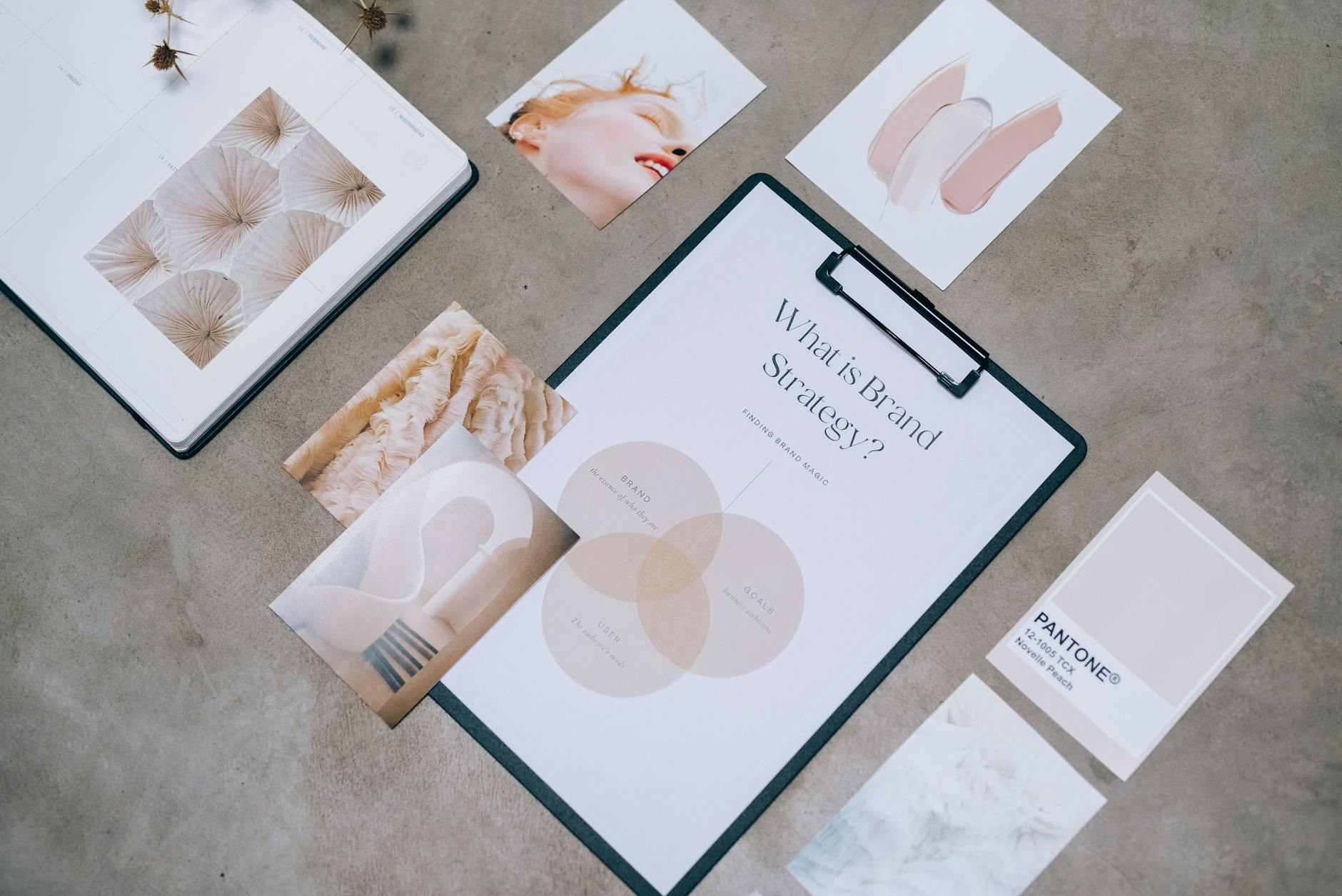
Every time someone picks up a pen, opens a notebook, or reaches for a sticky pad on their desk, there’s an opportunity for your brand to make an impression. Branded stationery remains one of the most practical and cost-effective promotional tools available to Australian businesses — and yet it’s frequently underestimated. Whether you’re a Sydney law firm outfitting your conference room, a Melbourne startup preparing welcome kits for new hires, or an Adelaide not-for-profit assembling delegate packs for an annual summit, quality branded stationery delivers consistent, daily visibility that few other merchandise categories can match. This guide covers everything you need to know about planning, ordering, and maximising the impact of a branded stationery investment for your organisation.
Why Branded Stationery Still Delivers Exceptional ROI
In an era where digital communication dominates, it might seem counterintuitive to invest in physical stationery. But the data tells a different story. Physical branded items are kept significantly longer than digital ads are viewed, and stationery items sit on desks — in plain sight — for months or even years. That’s an extraordinary amount of passive brand exposure for a relatively modest investment.
Unlike a social media post that disappears in a feed within hours, a well-designed branded notebook with your logo embossed on the cover continues working for you every single day it’s in use. The same logic applies to custom pens, printed lanyards, branded USB drives, and premium desk accessories. These items become part of a recipient’s daily routine, which means your brand becomes part of their daily routine too.
For businesses thinking more broadly about their promotional strategy, it’s worth reading our overview of how promotional products build brand awareness — the principles apply directly to stationery decisions.
The Categories That Perform Best
Not all stationery is created equal. When planning a branded stationery range, it helps to think in terms of three tiers:
Everyday essentials — branded pens, sticky notes, memo pads, and highlighters. These have broad appeal, very low unit costs, and work well as conference giveaways or bulk handouts at trade shows.
Premium desk accessories — branded notebooks (especially soft-touch or hard-cover journals), portfolios, desk organisers, and mouse pads. These are better suited to corporate gifting, executive welcome packs, or high-value client relationship management.
Functional accessories — lanyards, badge holders, USB drives, and card holders. These sit at the intersection of stationery and tech, and are particularly relevant for events, conferences, and employee onboarding kits.
Understanding Decoration Methods for Branded Stationery
One of the most important decisions in any stationery order is the decoration method. The right technique depends on the item material, the complexity of your artwork, and your budget. Getting this wrong can mean a logo that looks blurry, a colour that doesn’t match, or a finish that wears off within weeks.
Pad Printing
Pad printing is the most common method for branded pens and small items with curved or irregular surfaces. It’s cost-effective at volume and delivers sharp single-colour or multi-colour results. Most standard branded pen orders in Australia use pad printing, and it’s perfectly suited to logos with clean lines.
Debossing and Embossing
For premium notebooks and leather-effect portfolios, debossing (pressing the logo into the material) creates an understated, professional look that executives and corporate clients genuinely appreciate. If you’re putting together executive gift packs — which we explore in more depth in our guide to corporate gifting ideas — debossed notebooks are a strong choice.
Screen Printing and Digital Printing
Screen printing works well for flat stationery items like notepads, folders, and branded mailers. Digital printing is better suited to full-colour artwork with gradients or photographic elements, and is increasingly used for short-run orders where setup costs need to be kept low.
Laser Engraving
For metal pens, premium USB drives, and hard-cover notebooks with metal accents, laser engraving produces a precise, permanent result that won’t fade. This is particularly relevant for high-end corporate gifting where longevity and presentation quality matter. For a deeper dive into colour accuracy across decoration methods, our guide to Pantone colour matching for brand consistency is essential reading before placing your order.
Planning Your Order: MOQs, Timelines, and Budgets
Minimum Order Quantities
MOQs vary significantly across stationery categories. Branded pens typically have MOQs starting as low as 50–100 units, making them accessible for small businesses and community organisations. Premium notebooks often start at 25–50 units for standard sizes, while custom-printed notepads (where each sheet is printed) may require 250+ units to be economical.
For events and conferences, it’s common to work with multiple product categories simultaneously — for example, a Brisbane conference might combine branded pens (250 units), A5 notebooks (150 units), and lanyards (150 units) into a single delegate pack. Understanding MOQs across each item helps you budget accurately from the outset.
Turnaround Times
Standard production on most branded stationery in Australia runs between 7 and 15 business days after artwork approval, not from the date of order. This is an important distinction that many first-time buyers miss. If you need items for an event, work backwards from your delivery date, add 2–3 days for shipping (longer for Darwin, regional WA, or Tasmania), and then allow at least 2 business days for artwork proofing.
If your timeline is tight, express production options are sometimes available — but it’s worth understanding the cost implications before committing. Our post on express printing surcharges for urgent promotional orders explains what to expect and how to avoid last-minute premium costs with better planning.
Budgeting by Use Case
- Conference delegate packs: Budget $5–$15 per pack depending on included items. A pen and notebook combination lands comfortably in this range for mid-tier products.
- Executive gifting: $20–$60+ per recipient, using premium notebooks, quality pens, and additional items such as branded USB drives or card holders.
- Trade show giveaways: $1–$4 per item for branded pens, sticky notes, or small notepads. Volume is key here — the goal is broad distribution.
- Employee onboarding kits: $15–$35 per kit when combined with apparel items like custom printed t-shirts or accessories.
Selecting the Right Products for Your Audience
Corporate Businesses
For corporate audiences in Sydney, Melbourne, or Perth, quality signals matter enormously. A cheap pen that skips or a flimsy notebook that falls apart reflects directly on your brand. Invest in mid-to-premium tier products — soft-touch notebooks, branded metal pens, and well-constructed portfolios. Pairing stationery with complementary items like custom earbuds for client appreciation or branded drinkware creates a more memorable gifting experience.
Events and Conferences
Event planners across Australia consistently rely on branded stationery as the backbone of delegate packs. Lanyards deserve special attention here — they’re visible throughout the entire event, worn by every attendee. Custom lanyards are available in a range of materials and finishes, from basic polyester to premium woven or bamboo options, and they pair naturally with stationery packs.
For larger industry events, it’s worth reviewing our guide to custom gifts for industry summits in Australia for ideas on how to create comprehensive, cohesive merchandise packages that align with your event’s tone and audience.
Schools and Educational Institutions
Primary and secondary schools across Queensland, Victoria, and New South Wales frequently use branded stationery for student orientation packs, fundraising drives, and school community events. Notebooks, pencil cases, and pens branded with school colours and crests are perennially popular. If your school is also managing sporting events, check out promotional branded cricket stumps for junior cricket programs as an example of how branded merchandise extends well beyond the classroom.
Not-for-Profits and Charities
Budget sensitivity is critical for not-for-profit organisations. The good news is that branded stationery — particularly branded pens and notepads — offers some of the lowest per-unit costs in the entire promotional products industry. Charities can also explore eco-friendly stationery options made from recycled or sustainably sourced materials, which align well with mission-driven brand values. Our post on reusable promotional items for green businesses covers sustainable product options that apply equally to stationery selections.
Artwork, Proofing, and Quality Control
Getting your artwork right before production begins is the single most important thing you can do to ensure a successful branded stationery order. Most suppliers in Australia require print-ready files in vector format (AI or EPS), with fonts outlined and artwork sized to production dimensions. CMYK colour profiles are standard for most printing methods, though Pantone references should be specified separately for colour-critical work.
Always request a digital proof before approving production — and ideally, request a physical sample for larger orders above 200 units. It takes a little extra time, but catching an issue at the proof stage costs nothing. Catching it after 500 notebooks have been printed is an expensive lesson.
For orders that sit alongside broader merchandise strategies — for example, stationery accompanying winter corporate giveaways or event merchandise packs — consistency across all items is essential. Your logo colour, font, and layout should be identical across every product in the range.
If you’re curious about what’s trending in the broader promotional products space right now, our look at promotional products trends in Australia covers how stationery fits into 2026’s evolving merchandise landscape.
Key Takeaways
Branded stationery is a reliable, high-visibility investment that continues delivering for your business long after distribution. Before placing your next order, keep these fundamentals in mind:
- Choose decoration methods to match your material and budget — pad printing for pens, debossing for notebooks, laser engraving for premium metal items, and screen printing for flat stationery.
- Plan timelines carefully — standard production takes 7–15 business days post-approval, so build in adequate lead time and account for shipping to regional or remote locations.
- Match product quality to your audience — executive gift recipients expect premium finishes; trade show visitors are happy with functional everyday items.
- Always request a digital proof, and consider physical samples for large orders to avoid costly errors.
- Think in bundles — stationery works best as part of a cohesive merchandise package, combined with branded apparel, drinkware, or tech accessories to create a more complete brand experience.
Whether you’re putting together 50 executive gift sets for a Gold Coast client event or 1,000 delegate packs for a Canberra government conference, branded stationery gives your organisation a professional, lasting presence in the hands and on the desks of the people who matter most to your brand.