
Pantone Colour Matching for Corporate Brand Consistency Across All Merchandise
Learn how Pantone colour matching keeps your brand consistent across all promotional products. Expert tips for Australian businesses ordering custom merch.

Written by
Priya Kapoor
Branding & Customisation
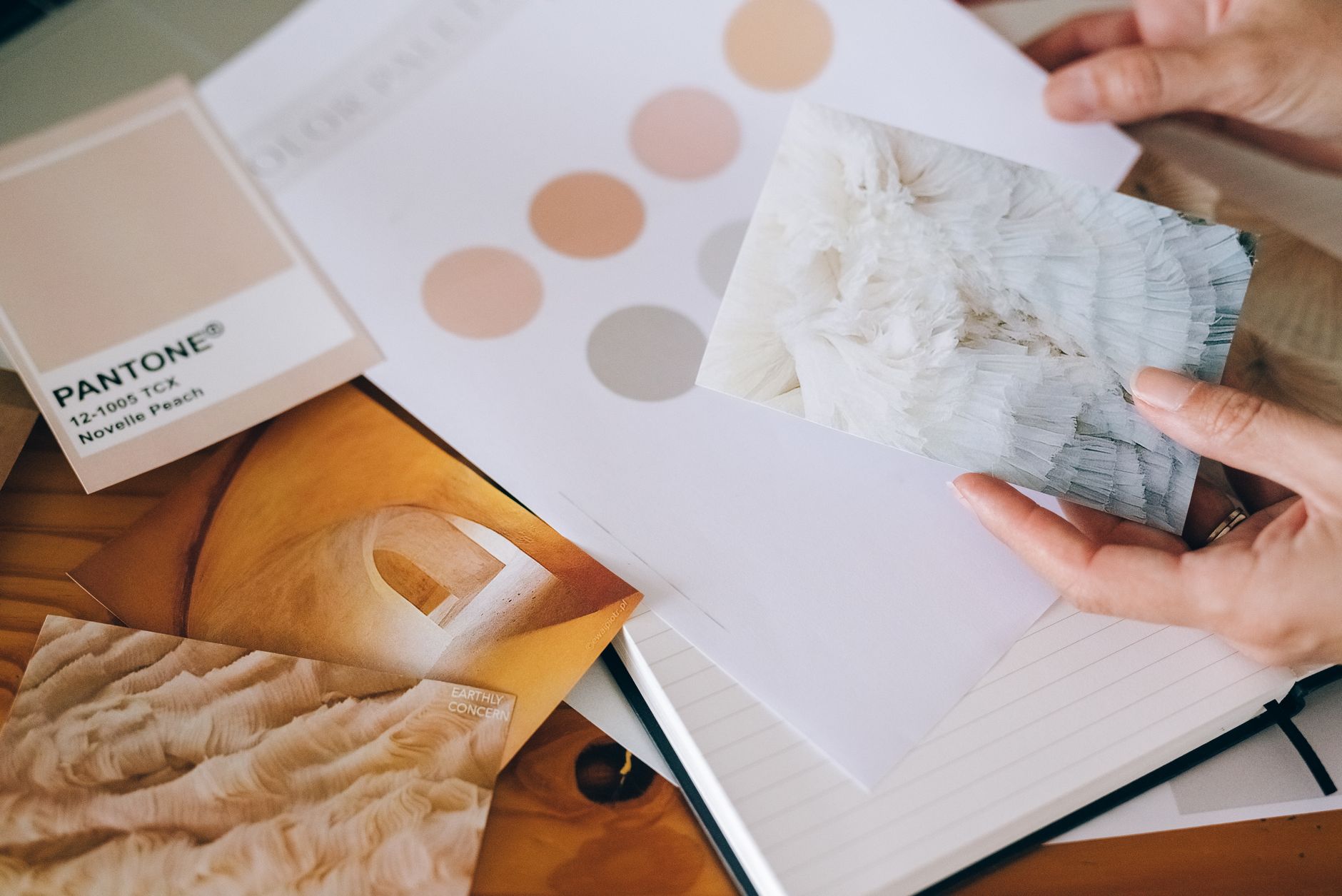
Getting your brand colours wrong on printed merchandise is one of the most frustrating — and costly — mistakes a business can make. Imagine ordering five hundred branded polo shirts for your Sydney sales team, only to discover the navy blue looks more like royal blue under office lighting, or your signature green has come out looking decidedly teal. It happens more often than you might think, and it’s almost always the result of one thing: not specifying Pantone colour matching for corporate brand consistency. Whether you’re a Melbourne marketing manager sourcing conference bags or a Brisbane event planner ordering bulk promotional products, understanding how the Pantone Matching System works could save you time, money, and a significant amount of brand embarrassment.
What Is the Pantone Matching System and Why Does It Matter?
The Pantone Matching System (PMS) is the global standard for colour communication. Developed in the 1960s, it assigns a unique numerical code to thousands of standardised colours, allowing designers, printers, manufacturers, and suppliers to speak the same language — regardless of where they’re located or what equipment they’re using.
When you specify a Pantone colour — say, PMS 286 C for a rich cobalt blue, or PMS 485 C for a vivid red — you’re giving your supplier an exact, universally recognised reference point. There’s no ambiguity, no guesswork, and no risk of a supplier interpreting “your” red as something that looks completely different once it’s printed.
For Australian businesses investing in branded merchandise, this matters enormously. Your logo appears across dozens of touchpoints: custom t-shirts, branded water bottles, lanyards, tote bags, corporate gifts, workwear, and event signage. If the colour shifts even slightly between products, it undermines the professionalism and cohesiveness of your brand identity.
PMS vs CMYK vs RGB: Understanding the Difference
If you’ve worked with a graphic designer, you’ve likely heard the terms CMYK and RGB thrown around. Here’s a quick breakdown:
- RGB (Red, Green, Blue) is a digital colour model used for screens, websites, and digital displays. It’s not suitable for print.
- CMYK (Cyan, Magenta, Yellow, Key/Black) is the standard four-colour printing process used in most commercial printing. It can approximate many colours, but it cannot reproduce every shade accurately.
- PMS (Pantone) uses pre-mixed, standardised inks that deliver precise, consistent colour. It’s the gold standard for brand colour accuracy in physical merchandise.
When a decorator prints your logo using CMYK, they’re mixing four inks together to try and match your colour. The results can be close — but they can also drift, especially on fabrics, moulded plastics, or textured surfaces. PMS inks are mixed before printing, so what you see on the Pantone swatch is what you get on the product. For true pantone colour matching for corporate brand consistency, PMS is always the preferred option when available.
Which Decoration Methods Support Pantone Colour Matching?
Not every decoration method supports direct PMS matching, and this is a crucial consideration when planning your merchandise order. Let’s break it down by method:
Screen Printing
Screen printing is one of the best decoration methods for accurate PMS matching. Each colour in your design is printed using a separate screen with a pre-mixed PMS ink. This makes it ideal for bold, flat logos on items like custom printed t-shirts, drawstring bags, and other apparel. Screen printing typically handles one to six colours, and each PMS colour is reproduced faithfully — provided your supplier has the right Pantone inks available.
Embroidery
Embroidery uses thread rather than ink, so it doesn’t work with Pantone inks directly. However, embroidery thread is available in Pantone-matched colour ranges from manufacturers like Madeira and Isacord. When briefing your embroidery supplier, provide your PMS code and ask them to match to the closest available thread colour. This is standard practice for corporate workwear and branded polos in Australia.
Pad Printing
Pad printing is commonly used for promotional items like pens, USB drives, and branded merchandise with curved surfaces. It supports PMS-matched inks and is a reliable method for maintaining brand consistency on smaller giveaway items — particularly relevant when ordering branded hand sanitisers for corporate wellness programs or similar compact products.
Laser Engraving
Laser engraving removes material to reveal the surface beneath, so it doesn’t use ink or colour at all. The result is typically a metallic silver or natural wood finish. This method is beautiful for premium corporate gifts and awards, but if colour accuracy is critical to your brand, laser engraving may not always be appropriate.
Sublimation and Digital Printing
Sublimation and digital printing methods work in CMYK (or extended colour gamuts), so they can’t reproduce PMS colours with the same precision. However, skilled decorators can use Pantone-to-CMYK conversion formulas to get remarkably close. If you’re ordering full-colour, all-over printed merchandise, discuss the closest achievable match with your supplier and request a pre-production sample before committing to a full run.
How to Specify Your Pantone Colours Correctly
Getting pantone colour matching for corporate brand consistency right starts with your artwork brief. Here’s what to do:
Know Your Brand’s PMS Codes
If your organisation has a brand style guide, your PMS codes should be listed there. If not, work with your graphic designer to identify the correct codes. Common pitfall: many businesses only have their colours specified in hex (for digital use) or CMYK (for document printing). Neither of these translates reliably to merchandise production. Make the investment in identifying your official PMS codes — it pays dividends every time you order branded merchandise.
Specify Coated vs Uncoated Pantone Swatches
Pantone colours come in coated (C) and uncoated (U) variants. Coated swatches (e.g. PMS 286 C) apply to smooth, coated surfaces — like printed plastics or coated paper stock. Uncoated swatches (PMS 286 U) are used for porous or uncoated surfaces like fabric, cardboard, or natural materials. The same Pantone number can look noticeably different between coated and uncoated versions. When ordering merchandise, clarify with your supplier which variant is appropriate for the substrate.
Request Pre-Production Samples
Always, always request a pre-production sample or physical proof before approving a large order. This is especially important when you’re working with a new supplier, a new product type, or a critical brand colour. The sample lets you assess the colour under real-world lighting conditions before the full production run begins.
Be mindful of express printing surcharges for urgent promotional orders — rushing an order often means skipping sample approval, which is a false economy. Build lead time into your schedule so you can approve a physical sample without compromising your deadline.
Maintaining Brand Consistency Across Multiple Product Categories
One of the biggest challenges Australian businesses face is maintaining brand colour consistency when ordering across multiple product categories simultaneously. Your logo might appear on BPA-free branded water bottles, glass water bottles, winter corporate giveaways, and event merchandise — all ordered from different suppliers, using different materials and decoration methods.
Here’s how to manage this effectively:
Create a Merchandise Brand Bible
Your marketing team’s main style guide covers digital and print applications, but consider creating a merchandise-specific brand bible that includes:
- Confirmed PMS codes for all brand colours
- Thread colour codes for embroidery (in Madeira or Isacord)
- Any known CMYK conversion values used for digital printing
- Photography examples of approved merchandise showing correct colour outcomes
- List of approved suppliers who have successfully matched your brand colours
This document becomes invaluable as your team grows, or when you’re working with event planners and third-party coordinators who need to order branded products on your behalf.
Consolidate Suppliers Where Possible
Working with a single supplier — or a small, trusted group — for your branded merchandise reduces the risk of colour drift between product categories. A supplier who knows your brand and has your PMS specifications on file can apply them consistently whether you’re ordering eco-friendly reusable promotional items, corporate gifts for industry summits, or biodegradable marketing giveaways.
Account for Substrate Variation
Colour can appear differently on different materials, even when the same PMS ink is used. A navy blue printed on a white cotton t-shirt will look different to the same navy printed on a dark green fabric or moulded plastic. White or light-coloured base materials almost always deliver the most accurate PMS reproduction.
When ordering on non-white or dark substrates, discuss the expected outcome with your supplier in advance. For example, embroidery on black workwear for electrical contractors or hi-vis garments will behave differently than embroidery on a white polo shirt.
Budget Considerations for PMS Matching
PMS matching can sometimes add cost to your order, but it’s typically modest compared to the total investment in branded merchandise. Here’s what to expect:
- Spot colour screen printing often carries a setup fee per colour, per screen (commonly $30–$80 per colour). The more colours in your logo, the higher the setup cost — though this is a one-time cost per design per print run.
- Thread matching for embroidery usually incurs a digitising fee for converting your logo to an embroidery file. Once digitised, reordering is usually faster and cheaper.
- Physical samples may be charged at a fee that’s credited against your order total if you proceed.
When planning your overall promotional merchandise strategy — whether for corporate gifting ideas, trade shows, or staff merchandise — factor PMS matching costs into your budget from the outset. It’s a worthwhile investment in brand protection. You can also explore promotional products trends in Australia and brand awareness statistics to better understand how merchandise quality and brand consistency influence ROI.
Conclusion: Key Takeaways for Getting Your Brand Colours Right
Pantone colour matching for corporate brand consistency isn’t just a technical detail — it’s a fundamental part of how your brand shows up in the world. When your colours are consistent and accurate across every product you produce, it signals professionalism, attention to detail, and a brand that takes itself seriously.
Here are the key takeaways to keep in mind:
- Know your PMS codes. If your brand style guide doesn’t include them, work with your designer to identify and document them before your next merchandise order.
- Choose the right decoration method. Screen printing and pad printing offer the most reliable PMS matching; embroidery uses matched thread colours; sublimation and digital printing require careful CMYK conversion.
- Specify coated vs uncoated Pantone swatches based on the substrate your product is made from — the difference can be significant.
- Always approve a physical sample before a full production run, and build enough lead time into your schedule to do so without paying rush fees.
- Create a merchandise brand bible that documents your colour specifications for every decoration method, and share it with anyone who orders branded products on your behalf.
Get these foundations right, and you’ll be ordering branded merchandise with confidence — knowing that every product, from Perth to Hobart, reflects your brand exactly as it should.